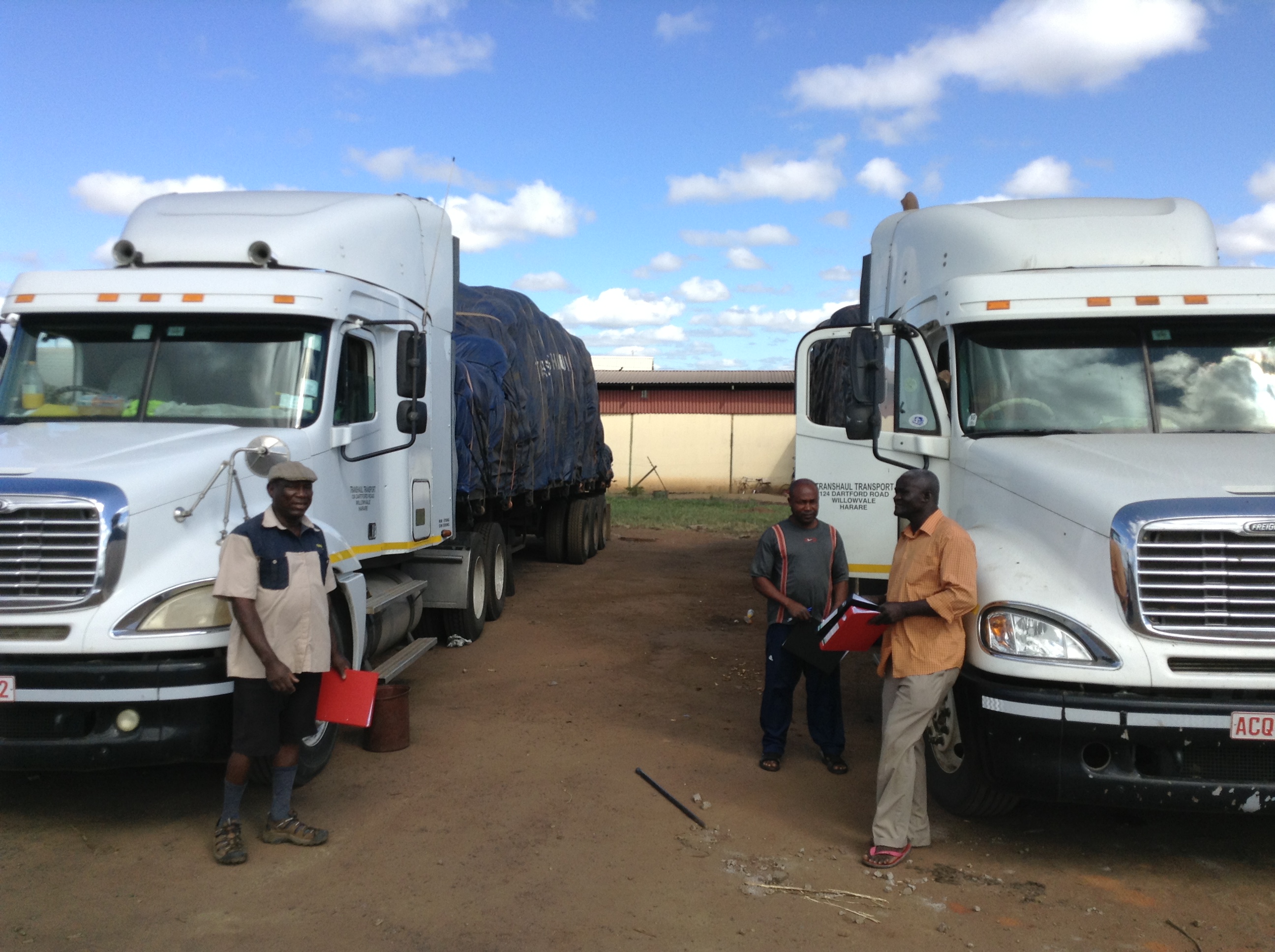
(Photo by Brent Edelman, 2014)
Export bans, export license requirements, and other non-tariff barriers (NTB’s) faced by exporters of agricultural commodities have been the subject of much public discourse in Malawi of late. At the May 2014 "Trade, Industry and Private Sector Development Sector Wide Approach (TIPSWAp)" quarterly meeting, ministry officials, private sector representatives, and development partners launched a discussion on the impact that these bans have on Malawi's economy. A recent study initiated by USAID's Feed the Future/Incorporating Nutrition into Value Chains program estimates that a ban on soya exports costs Malawi's economy 3.4 billion MWK in forgone economic activity for a typical growing season. The ban hurts smallholder farmers the most, as net farm revenues fall by 60%. And even in the absence of an export ban, it still remains costly and tedious to export soya: complying with official rules and regulations alone requires 47,500 MWK, 56 days, 15 office visits, 17 documents, and dealing with 8 different institutions. On a positive note, the Government of Malawi has recently lifted the export license requirement for soya, one of the major NTBs faced by exporters. IFPRI is in the process of studying the factors that led to this successful reform. Using the Net-Map research method, IFPRI researchers are assessing the key actors in this reform, their viewpoints, and networks, and plan to use these findings to inform future trade policy reform initiatives. Preliminary results are expected in June 2014 and will be presented at the Oil Seed Products Technical Working Group and at the 17th Annual Conference on Global Economic Analysis.
*Brent Edelman, PhD is an economist and IFPRI collaborator.