From 25-29 August 2025, IFPRI Malawi, at the request of the National Planning Commission (NPC), held a five-day training workshop on Social Accounting Matrices (SAMs) and Computable General Equilibrium (CGE) Modeling using the IFPRI’s RIAPA modeling and data systems. The workshop brought together participants from NPC, the Ministry of Finance and Economic Affairs (Department of Economic Planning and Development, the Ministry of Agriculture, and the National Statistics Office. The goal was to strengthen their capacity in using economywide analysis for evidence-based policy design, particularly in the context of the ongoing midterm review of the Malawi 2063 First 10-Year Implementation Plan (MIP-1).
Economywide models are important tools for policy makers and can help them understand complex impact pathways of policies, investments, or shocks across the entire economy. For example, a fertilizer subsidy may not only boost maize production, but it influences labor markets, household incomes, food prices, and even trade. By capturing these linkages, SAM and CGE models provide valuable insights for making informed decisions that support inclusive growth and development.
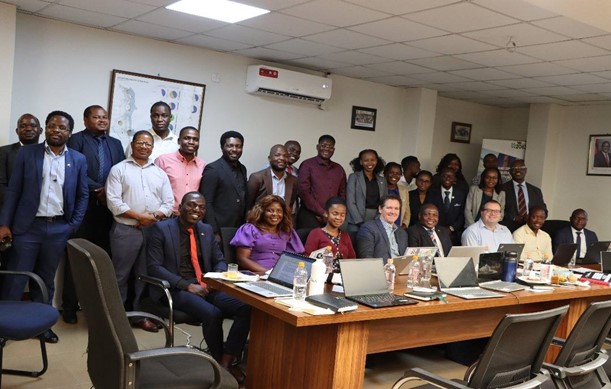
The training took place at the NPC office in Lilongwe. James Thurlow (Director), and Karl Pauw (Senior Research Fellow) from IFPRI’s Foresight and Modeling Unit conducted the training, which was attended by 25 participants.
The training was aimed at:
- Introducing participants to the concepts and uses of SAMs
- Providing practical skills in using SAM multiplier analysis to assess direct and indirect economic impacts
- Equipping participants with hands-on experience in building and running CGE models
- Demonstrating how economywide models can be extended to analyze issues such as trade, taxation, investment, and poverty reduction
- Strengthening participants’ ability to interpret model results for policymaking and program evaluation
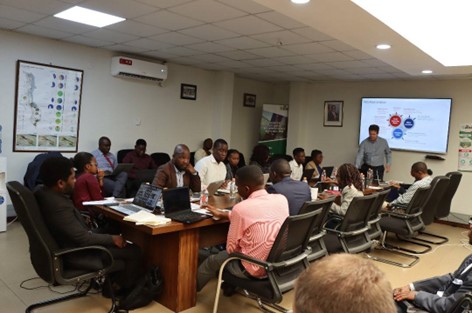 By the end of the five-day training, participants had strengthened their understanding of how economywide models can be applied to real-world policy questions. They gained practical skills in constructing and analyzing Social Accounting Matrices, running simulations with CGE models, and interpreting results for decision-making. These skills will enable them to better assess the potential impacts of policies, investments, and external shocks on different sectors and households. Ultimately, the training has equipped participants with valuable tools to contribute more effectively to evidence-based policymaking and inclusive development planning in Malawi and beyond. Finally, participants worked on sectoral and subsector growth options for the Malawi 2063 first 10-Year Implementation Plan (MIP-1) Accelerator program.