21 October 2025
Stakeholders from government, research institutions, NGOs, and donor agencies gathered at Ufulu Gardens in Lilongwe for the dissemination of a groundbreaking study on the use of organic waste to reduce deforestation and improve the quality of smoked fish products. The study, conducted by WorldFish under the EU-funded DeSIRA project, offers promising solutions to two pressing challenges: post-harvest losses and environmental degradation. The study explored the use of organic waste materials such as rice husks to produce briquettes as an alternative energy source for fish smoking.
Locally inspired, globally relevant
In his welcome remarks, Joachim De Weerdt, emphasized the local relevance of the technology and the need to scale it nationally. “This is a technology driven by Malawi’s specific needs,” he noted, highlighting its relevance to the country’s pronounced seasonality, persistent nutritional challenges, widespread deforestation, and the urgent need for job creation beyond traditional agriculture—particularly in food processing. He also pointed to the importance of aligning innovations with consumer preferences, a theme to be explored further in the day’s presentation. While celebrating the local appropriateness of the solution, De Weerdt urged participants to engage critically with the question of scalability. “Appropriateness alone is not enough,” he cautioned. “We must ask: do we have the evidence, the materials, the systems, and the policy environment needed to take this to scale?” He praised the collaborative spirit behind the project—bringing together the Government of Malawi and CGIAR—and expressed enthusiasm for the CGIAR’s investment in policy engagement through its new country policy hubs, with Malawi being one of only four countries globally selected. “This is a unique opportunity,” he concluded, “to have an in-depth, honest discussion about what it will take to move from promising pilots to national impact.”
Turning waste into wealth
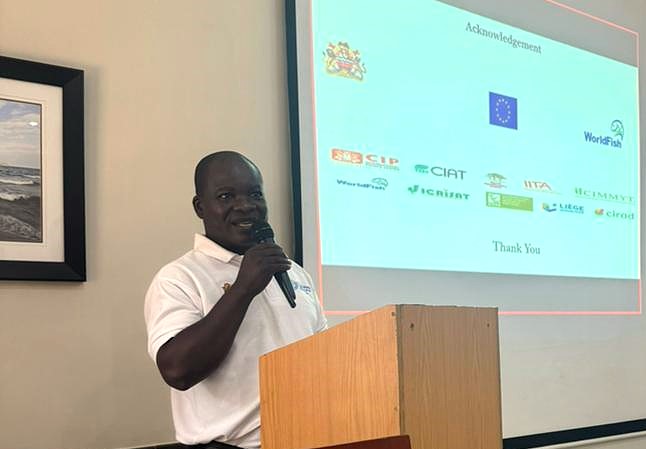
Hastings Zidana, Director of Fisheries at the Department of Fisheries, Ministry of Natural Resources and Climate Change, opened his remarks by expressing gratitude to IFPRI for convening the dissemination event and to WorldFish and the Department of Fisheries—particularly the Monkey Bay Capture Fisheries Unit—for their role in developing the featured technology. He underscored the critical role of the fisheries sector in Malawi’s economy and food systems, noting that fish contributes nearly 70% of the country’s animal protein intake and supports livelihoods across the value chain, especially for women engaged in fish processing. However, Dr Zidana also highlighted the sector’s persistent challenges, particularly post-harvest losses estimated at 40–50%, and the environmental toll of traditional processing methods such as sun-drying and firewood-intensive smoking. “We’ve seen trucks loaded with firewood just to process fish,” he said, pointing to the urgent need for more sustainable alternatives. The innovation being presented, which utilizes organic waste as a fuel source, offers a promising solution. “This is a game-changer,” he emphasized, calling for collective efforts to scale the technology and reduce both post-harvest losses and environmental degradation. He concluded by reaffirming the department’s readiness to engage with researchers and partners to drive meaningful change in the sector.
Following the opening remarks, James Banda, Principal Research Officer, at the Department of Fisheries, Ministry of Natural Resources and Climate Change, presented the study’s findings. The research tested briquettes made from rice husks—both carbonated and non-carbonated—as alternative fuel sources for fish smoking. He detailed how briquettes made from rice husks can replace firewood in improved fish smoking kilns. Compared to traditional firewood and charcoal, carbonated briquettes produced smoked fish with superior nutritional quality, lower microbial loads, and longer shelf life of up to 25 days. Sensory evaluations further confirmed consumer preference for fish smoked with briquettes. Economically, the technology showed promising returns.
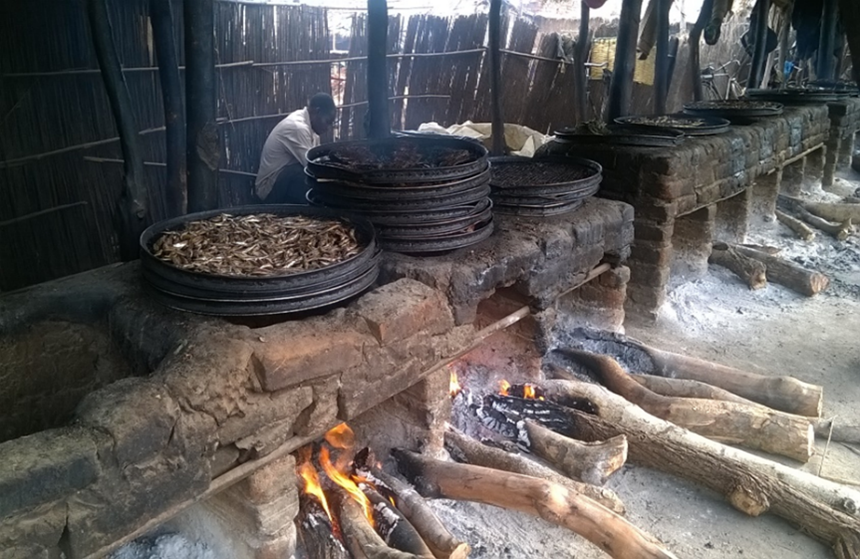
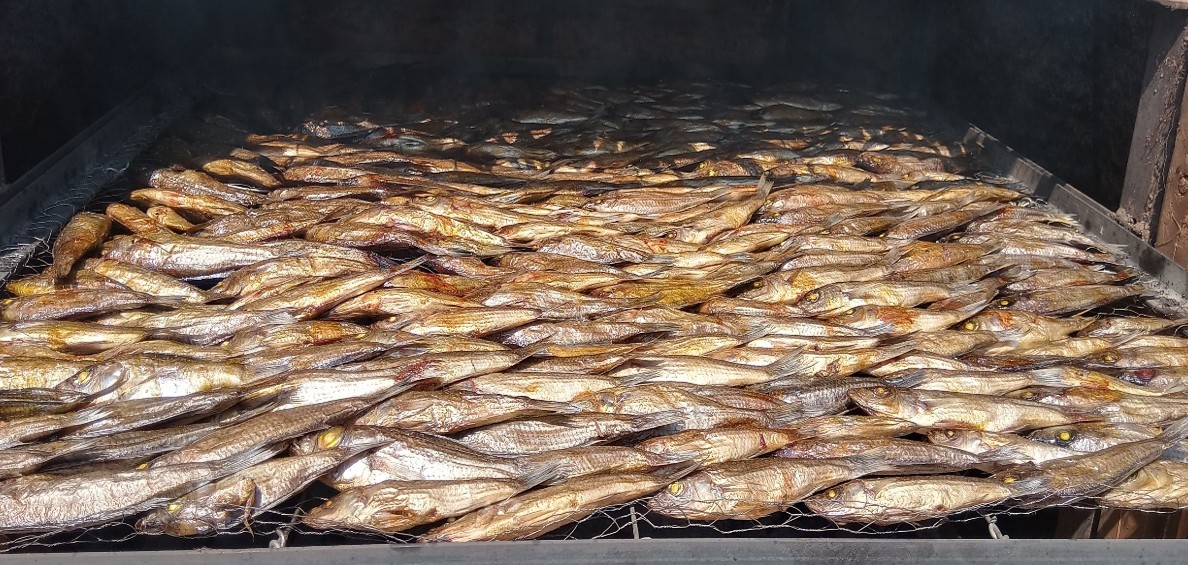
The research also showed that the new fuel source helps mitigate deforestation, as rice husks are readily available by-products of local rice milling. Banda described the technology as both environmentally sustainable and economically viable, with potential to create entrepreneurial opportunities for women and youth in briquette production and distribution.
From research to practice
The discussion that followed was centered on adoption, scaling and sustainability. Some questioned cost and accessibility, while others emphasized the need for private sector involvement to sustain briquette production. “People will always choose the cheaper option,” one participant noted. “For adoption to happen, briquettes must be affordable and easily available.” De Weerdt echoed this sentiment, adding: “As long as firewood remains free or cheap, change will be slow. We need policies and incentives that make briquettes the more profitable, sustainable choice.”
While several technical and policy issues were raised, including cost, accessibility, and scaling mechanisms, participants agreed that these do not minimize the impressive progress already made in developing and testing this innovative technology. The study offers tangible evidence that locally sourced organic waste can drive environmental and economic transformation in Malawi’s fisheries sector.
The event concluded with a call to action: identify bottlenecks, mobilize investment, and explore partnerships for scaling. There was a collective commitment from partners to strengthen partnerships and champion innovations that support a more sustainable and resilient fisheries value chain in Malawi.