 Malawi experiences some of the highest seasonal maize price volatility in the region. Prices often fluctuate dramatically within a single year, affecting both farmers and consumers and undermining food security. Because maize is the country’s staple food and a central component of household consumption, price instability has far-reaching implications for livelihoods, poverty, and economic stability.
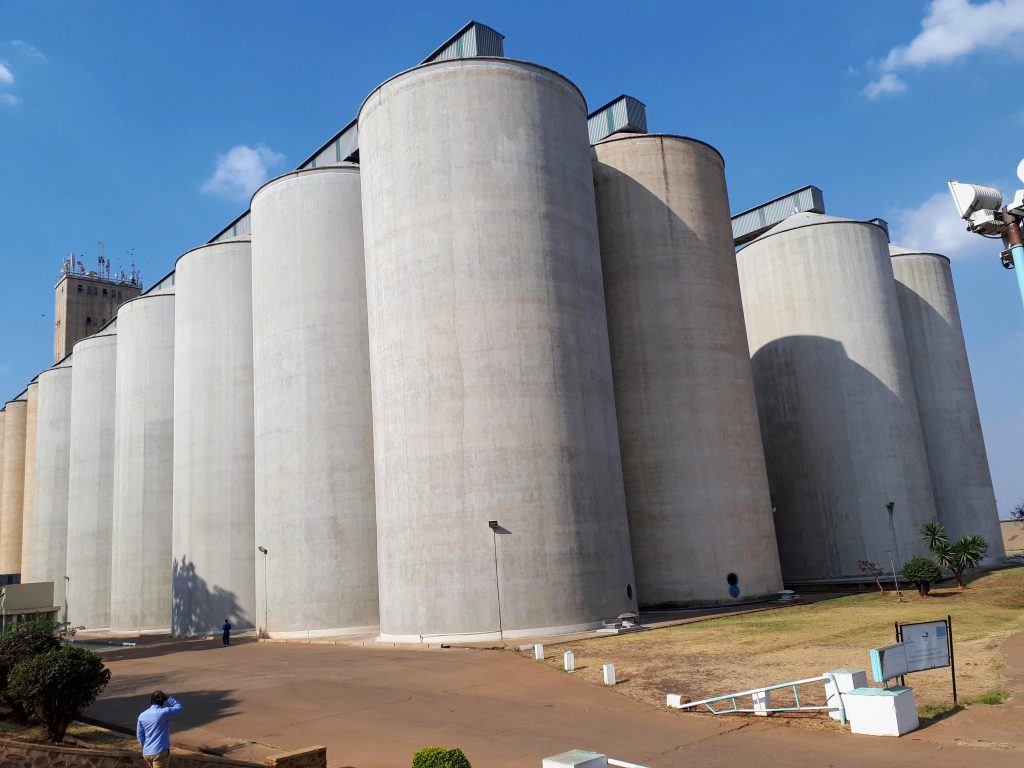
To mitigate the negative welfare impacts of seasonal price fluctuations, the Government of Malawi has implemented several policy interventions, including the operation of Strategic Grain Reserves (SGRs). These reserves are intended to help stabilize markets by purchasing maize when supply is high and releasing stocks during periods of scarcity.
Despite their importance in policy discussions, there is limited empirical evidence on how effective such interventions are in stabilizing prices. Recognizing this gap, the Department of Agricultural Planning Services of the Ministry of Agriculture, Irrigation and Water Development encouraged the International Food Policy Research Institute (IFPRI) to conduct a study examining the conditions under which SGRs can stabilize maize prices, and the extent to which such stabilization is possible.
To discuss and validate the study’s preliminary findings, IFPRI convened a stakeholder workshop on 25 March 2026, bringing together policymakers, researchers, and development partners engaged in Malawi’s maize sector.
Opening the dialogue
Opening the workshop, the Malawi IFPRI Program Leader Joachim De Weerdt highlighted the central role maize prices play in Malawi’s broader development trajectory. Stable and predictable food prices, he noted, are essential for improving household welfare while enabling structural transformation in agriculture and the wider economy.
“Maize prices are really fundamental to Malawi’s development,” he said, emphasizing that persistent volatility constrains economic diversification by forcing many households to remain focused on subsistence food production.
Recent price trends illustrate the magnitude of the challenge. Maize prices rose sharply from about MWK 600 per kilogram in June 2024 to nearly MWK 1,700 by March 2025, placing pressure on consumers while creating uncertainty for farmers, traders, and policymakers alike. Such swings underscore the need to better understand the drivers of price volatility and the effectiveness of policy tools designed to address it.
Understanding the drivers of price volatility
Jan Duchoslav, IFPRI research fellow, presented the study that examined the structural factors underlying maize price fluctuations in Malawi and assessed how grain reserve operations interact with these market dynamics. Seasonal production and consumption patterns play a major role: following the harvest period, maize supply is abundant and demand low, so prices also tend to be relatively low. Many farmers sell a large share of their production during this period to meet immediate cash needs, including repayment of production costs and household expenses, while they also consume maize that they grew. As the year progresses and household stocks decline, market supply tightens, demand increases, and prices rise.
Regional market integration adds another layer of complexity. Malawi’s maize market is closely connected to those of neighboring countries through both formal and informal cross-border trade. When domestic prices rise above the cost of importing maize, traders bring grain into the country. Conversely, when prices fall below export parity levels, maize flows out to regional markets where prices are higher. These dynamics effectively create a regional price band which prevents price extremes in Malawi, but which also constrains the ability of domestic interventions to influence prices.
Within this context, the study examined how strategic grain reserves could moderate seasonal price swings by purchasing maize when prices are low and releasing stocks when prices rise. In theory, such buffer stock operations can smooth price fluctuations and improve market stability. However, the study points out that the extent to which strategic grain reserves can smooth prices is limited by several factors: SGR storage capacity, financing arrangements, and the timing of market interventions are often mentioned in this context. In addition, the study stresses the crucial role that regional maize markets play in determining prices in Malawi and in the ability of the SGR to influence them. Import and export prices serve as natural price ceilings and floors. At the same time, they minimize the space within which SGR operations can influence domestic prices.
Stakeholder perspectives
The validation workshop allowed participants to examine the findings and reflect on their implications for Malawi’s maize market policies. Discussions highlighted practical factors shaping price stabilization measures, including regional differences in production, market access, and cross-border trade patterns that influence local price dynamics. Timing also emerged as important, particularly the alignment between harvest periods and government purchasing programs. Participants also emphasized the broader role of strategic grain reserves beyond price stabilization. Grain reserves remain an important tool for ensuring national food security, especially during production shocks, droughts, or humanitarian crises. Maintaining adequate reserve stocks can therefore support multiple objectives, including emergency response and supply management.
Discussions further underscored that stabilizing maize prices requires a combination of policy approaches rather than reliance on a single intervention. Strategic grain reserves can help manage supply during shortages but operate within a broader market system shaped by infrastructure, trade policies, and private sector activity. Improving transport networks and market infrastructure could reduce regional price disparities and facilitate movement of maize from surplus to deficit areas. Greater clarity and predictability in government maize market policies may also encourage private investment in maize storage, trading, and processing, allowing the private sector to complement government interventions and improve market efficiency. Regional trade integration also remains critical, as facilitating cross-border maize trade can help balance supply and demand across countries and reduce the severity of price spikes during local shortages.
Informing policy through evidence
The validation workshop offered a valuable platform for dialogue between researchers and policymakers, helping to refine the study’s findings and identify areas for further analysis. Such engagement is essential for ensuring that research informs practical policy decisions in Malawi’s food system.
In closing remarks Readwell Musopole, Deputy Director of Planning at the Ministry of Agriculture, Irrigation and Water Development, commended the collaboration and emphasized the importance of grounding policy decisions in empirical evidence. He captured the room’s sentiment with the observation that “SGRs remain vital for Malawi, but understanding where they can genuinely make a difference, and where they cannot, is essential for designing realistic interventions.”
He also noted the value of piloting localized tracking of SGR releases and market responses to strengthen future analysis and address existing data gaps.
Read and download the presentation here (PDF 1.08MB)