
The conversation published an article by Joachim De Weerdt, Gowokani Chijere Chirwa, Jan Duchoslav, Joseph Nagoli, and Lara Cockx. The piece highlights the deep-rooted structural challenges that whoever wins Malawi's 2025 elections will need to address to achieve lasting food security and inclusive economic growth. Drawing on our research, this article sets out some of the […]
Training on Social Accounting Matrices and CGE modelling for policy analysis in Malawi

From 25-29 August 2025, IFPRI Malawi, at the request of the National Planning Commission (NPC), held a five-day training workshop on Social Accounting Matrices (SAMs) and Computable General Equilibrium (CGE) Modeling using the IFPRI’s RIAPA modeling and data systems. The workshop brought together participants from NPC, the Ministry of Finance and Economic Affairs (Department of […]
Grounding AI in practice: What extension gets wrong, what extension gets right, and what AI can learn
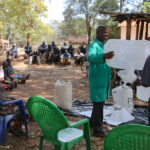
Generative artificial intelligence (gen AI) applications—which produce text, images, code, and other content based on surfacing patterns in vast datasets—promise many benefits for agrifood systems (e.g., reaching more people at less cost, availability around the clock, real-time data).
Closing the knowledge gap: Research priorities for preventing child wasting
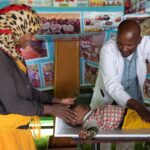
Preventing child wasting is more urgent than ever before. Nearly 43 million children worldwide suffer from wasting at any given time, and severe wasting accounts for 20% of deaths among children under 5 years of age. This situation will likely worsen as conflicts and crises intensify poverty and food insecurity around the world.
Realistic options for repurposing fertilizer subsidy spending
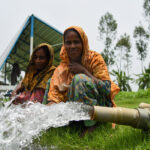
Worldwide, government spending on subsidies in agriculture, fishing, and fossil fuels amounts to a staggering $1.25 trillion annually. Subsidies play a significant role in every country’s fiscal policies, regardless of income level or spending patterns. Spending on energy and agricultural subsidies consistently accounts for 2%-3% of GDP on average across income levels and make the production and transportation […]
- « Previous Page
- 1
- 2
- 3
- 4
- 5
- …
- 24
- Next Page »