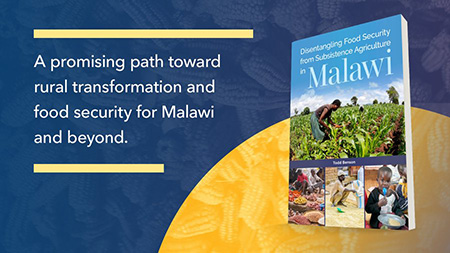
Women are key to rural revitalization in developing countries, but various constraints and obstacles limit their contributions to their households and communities. During our research seminar on June 12, Elena Martinez and Emily Myers, Research Analysts at IFPRI, Washington DC, presented the Women’s Empowerment in Agriculture Index (WEAI) and its modifications as tools that quantify […]
Exploring the benefits of social protection in Africa
This post is cross-posted from the IFPRI website and was originally written by Katarlah Taylor. Social protection—public or private initiatives that aid the poor and protect the vulnerable against risks to their livelihoods—is key to efforts to reduce hunger in Africa, according to a report by Regional Strategic Analysis and Knowledge Support System (ReSAKSS) project. […]
Brown Bag Research Seminar: The Women’s Empowerment in Agriculture Index – What have we learnt?
Wednesday, June 12, 2019, 12:30 - 14:00
The Women’s Empowerment in Agriculture Index (WEAI), a survey-based tool launched in 2012, has been widely used to measure and understand women’s empowerment and inclusion in the agricultural sector. The WEAI was originally designed as a monitoring and evaluation tool for the Feed the Future Initiative (FTF) and has been rolled-out in 19 FTF focus countries.
Soil Fertility Management in Sub-Saharan Africa: Status, Challenges and Future Prospects
Healthy and productive soils are essential for food and nutrition security. However, soils may also contain chemicals or pathogens that can negatively impact human health. Poor soils also result in low yields and low household income. In an IFPRI research seminar on May 8, 2019 Patrick Mutuo, a Courtesy Associate Professor at the Department of […]
The Structure, Conduct and Performance of Maize Markets in Malawi: Some findings from main harvest and lean seasons
Maize is the most important staple crop in Malawi, contributing around 66% of calories to typical household diets. Studies show that the per capita consumption of maize grew from 129kg/year in 1998–2008 to 146kg/year by 2017. Most of the maize consumed in Malawi is produced by smallholder farmers, although in deficit years maize is also […]
- « Previous Page
- 1
- …
- 39
- 40
- 41
- 42
- 43
- …
- 57
- Next Page »