IFPRI Malawi, with funding from the Government of Flanders, is conducting a study to assess the performance of primary agricultural cooperatives in Malawi in order to provide evidence to the Government of Malawi, donors, NGOs, cooperative leaders, and other stakeholders. Recommendations will be formulated to develop strategies and mechanisms to build the capacity and inclusiveness […]
Virtual event: Building Resilient Communities – Learning from Titukulane’s Integrated Approach in Malawi
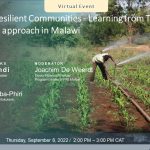
Abstract: Titukulane is a $75M five-year USAID-funded Resilience Food Security Activity, running from 2019 to 2024. The program is implementing Malawi’s National Resilience Strategy (NRS) in Mangochi and Zomba districts. NRS guides investments in agriculture, reduction in impacts and improvements in recovery from shocks, promotion of household resilience, strengthening the management of Malawi’s natural […]
Virtual event: Selling Crops Early to Pay for School: A Large-Scale Natural Experiment in Malawi

Abstract: In 2010, primary school in Malawi began in September, three months earlier than in 2009. I show that this change forced households to sell crops early, when prices are low. The effect is limited to households with school children, increases with the number of children, and is present only for poor households. Households that […]
Virtual Event: Adapting yet not Adopting? Conservation Agriculture in Central Malawi
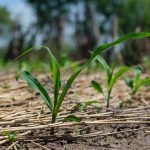
Abstract: Conservation Agriculture (CA) has been widely promoted as a pathway to sustainably intensify agriculture in sub-Saharan Africa (SSA). Yet despite decades of promotion, CA uptake in SSA remains sparse with only few analyses of its impacts on farming and rural livelihoods. This study, which focuses on areas in Central Malawi considered to have a […]
Virtual Event: Follow the Leader? A Field Experiment on Social Influence
Abstract: We conduct an artefactual field experiment in endogenously formed groups in rural Malawi to investigate social influence in risk taking. Treatments vary whether individuals observe the behavior of a formally elected leader, an external leader, or a random peer. Results show social influence in risk taking with differential influence by leader type. The decisions […]
- « Previous Page
- 1
- 2
- 3
- 4
- 5
- 6
- …
- 22
- Next Page »