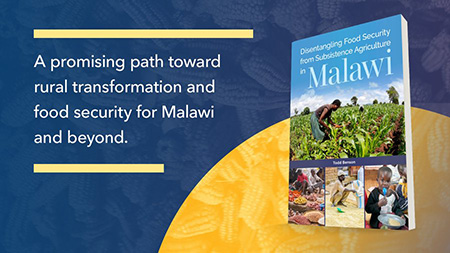
High quality fortified premixed cereals can help caregivers meet infants’ nutrient needs after 6 months of exclusive breastfeeding. Such cereals are widely used in nutrition assistance programs, but brands available in stores tend to be poorly regulated in terms of nutrient composition and labeling. There is also considerable concern about mycotoxin contamination in these products; […]
Why irrigation is key to feeding Africa south of the Sahara’s growing population
This post is cross posted from the IFPRI website and was originally written by Claudia Ringler, Deputy Director of IFPRI's Environment and Production Technology Division (EPTD). The post first appeared in African Leadership Magazine. Can Africa south of the Sahara feed itself? This question has been asked for decades, but no satisfying answer has yet been […]
Brown Bag Research Seminar
Wednesday, February 27, 2019, 14:00 pm - 15:30 pm. Topic: Modeling the Effectiveness of Lead Farmer Approach in Agricultural Extension Service Provision: Nationally-representative Panel Data Analysis in Malawi.
The lead farmer (LF) approach is implemented and heavily promoted nationwide in Malawi to support government extension workers and accelerate technology dissemination. Earlier reports show that the LF approach has been widely adopted by most agricultural projects in Malawi, indicating positive roles and contributions of LFs.
Cash, food or vouchers? Evidence from a four-country experimental study
“What do we know about the relative merits of providing assistance in the form of food or cash in developing countries? asked Daniel Gilligan, Deputy Division Director of the Poverty, Health and Nutrition Division, IFPRI, Washington DC to start his presentation on February 12, 2019. Many studies provide evidence on the impact of food or […]
Discussion Paper 1804: Adding a Nutrition Behavior Change Communication Component to an Early Childhood Development Intervention
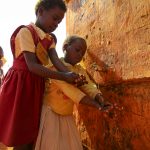
Discussion Paper 1804: Adding a nutrition behavior change communication component to an early childhood development intervention in Malawi: A cluster randomized trial Authors: Aulo Gelli, Melissa Gladstone, Aisha Twalibu, Theresa Nnensa, Patricia Kariger, Harold Alderman, February 2019. In Africa south of the Sahara, including Malawi, an estimated 61 percent of children below the age of […]
- « Previous Page
- 1
- …
- 35
- 36
- 37
- 38
- 39
- …
- 46
- Next Page »