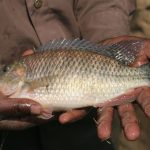
In an IFPRI Malawi brown bag research seminar on March 18, 2020 Christopher Chikowi, MSc student at the Department of Agricultural and Applied Economics at the Lilongwe University of Agriculture and Natural Resources (LUANAR), presented on a recent study that analysed urban consumer choices and demand for two species of tilapia, Lake Malawi Oreochromis Nyasalapia, popularly known as Chambo, and Oreochromis Shiranus, known as Makumba, in unprocessed (fresh and fresh-frozen products) and processed (smoked and dried products) form.
IFPRI Malawi supports the Department of Agricultural Planning Services with laptop computers

IFPRI Malawi works to support policy development and improved planning within the Government of Malawi. The Department of Agricultural Planning Services (DAPS) in the Ministry of Agriculture, Irrigation and Water Development (MoAIWD) is one of our key government counterparts. On 28 February 2020 IFPRI Malawi's Program Leader, Bob Baulch, visited DAPS to hand over six laptop computers. The computers were well received by Readwell Musopole, Acting Director of DAPS.
Training on Poverty Mapping Methods for staff members of the National Statistical Office of Malawi

IFPRI Malawi organized a five-day poverty mapping methods training with statisticians from the NSO. The training took place from 24 to 28 February 2020 at IFPRI Malawi’s office in Lilongwe. Nicholas Minot, Deputy Division Director of IFPRI’s Markets, Trade, and Institutions Division, and Jack Thunde, Research Analyst at IFPRI Malawi, conducted the training, which was attended by 14 statisticians.
IFPRI Malawi Maize Market Report February 2020
The Monthly Maize Market Reports are developed by researchers at IFPRI Malawi, with the main goal of providing clear and accurate daily maize price data in selected markets throughout Malawi. The reports are intended as a resource for those interested in maize markets in Malawi, namely producers, traders, consumers, or other agricultural stakeholders.
Event Recap – Market Information and Farmers’ Access to Structured Markets
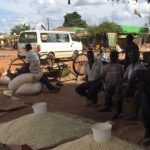
In an IFPRI Malawi brown bag research seminar on February 26, 2020 Rosemary Botha presented the findings of a recent IFPRI Malawi study, which analyzed whether providing better price information increases volumes sold through structured markets, sales prices, and farmers’ levels of commercialization.
- « Previous Page
- 1
- …
- 87
- 88
- 89
- 90
- 91
- …
- 93
- Next Page »