IFPRI’s five decades of experience has shown that development policy research has a stronger likelihood of making an impact and meeting real-world needs when it is adapted to local contexts and created with national and local partners. The best bet for generating context-specific research is operating within beneficiary countries and communities. Building on this evidence, […]
Policy Note 60: Anchor enterprise models and local economic development in Malawi
Abstract: This paper examines how anchor enterprises contribute to local economic development in Malawi. It finds that most of the income injected into local economies through these enterprises circulates locally, generating substantial spillover benefits beyond those directly linked to the enterprises. However, much of this spending passes through local businesses that source goods and inputs […]
El Niño is coming and the time for Malawi to prepare is running short

A strong El Niño has developed in the Pacific Ocean, raising the risk of below-normal rainfall and prolonged dry spells during Malawi’s coming agricultural season (November 2026 – March 2027), especially in the southern parts of the country. While no forecast is ever certain, history suggests that Malawi should take the threat seriously. Since reliable […]
El Niño and rising fertilizer costs: How vulnerable is Malawi in 2027?
Historically, El Niño events are strongly associated with reduced rainfall during Southern Africa’s main cropping season (December-March). Malawi, however, has sometimes escaped serious El Niño impacts. Thanks to its position on the northern edge of the region, the degree to which it is affected by drought during strong El Niño years has varied widely (Figure 1). In […]
Working Paper 48: Estate agriculture in Malawi and its economic interplay with the smallholder sector: A historical perspective
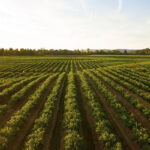
Abstract: While smallholder farming remains at the center of agricultural transformation efforts in Malawi, there is renewed interest in the potential role of larger-scale farming in accelerating agricultural and rural devel-opment. Larger-scale farms —“estates”— have, however, been part of Malawi’s agricultural landscape for more than 140 years. Agriculture has long been described as bifurcated with […]
- 1
- 2
- 3
- …
- 98
- Next Page »