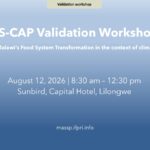
The Ministry of Agriculture, Irrigation and Water Development in collaboration with the World Bank and the International Food Policy Research Institute (IFPRI), is pleased to invite you to a stakeholder validation workshop on the Food System–Climate Action Plan (FS-CAP). The FS-CAP is a country-level diagnostic tool developed by the World Bank to support countries in […]
Working Paper 47: Strategic grain reserves and maize price stabilization in Malawi: What policies are feasible?
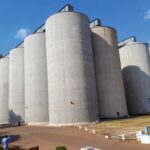
Abstract: Maize price instability remains a major policy challenge in Malawi, where most households depend on maize for both production and consumption. Many farmers sell maize after harvest, when prices are low, only to buy it back during the lean season, when prices are high. This paper examines whether Malawi's Strategic Grain Reserve, managed by […]
Targeting fertilizer subsidies: Five lessons for sustainable and equitable policy reform

Fertilizer subsidy programs remain a common policy tool for promoting food security and supporting agricultural livelihoods in low- and middle-income countries (LMICs), though they have serious downsides. They command substantial government resources but do not always deliver economic benefits, often undermine market development, and are linked to reduced water quality, deforestation, and other negative environmental impacts.
Policy Note 59: El Niño preparedness and response
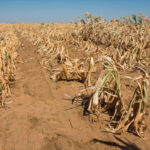
Abstract: Malawi faces an increased risk of drought and poor harvests as El Niño conditions strengthen ahead of the 2026/27 agricultural season. Coming on the heels of recent weather shocks, high food prices, fertilizer supply constraints, and broader economic pressures, another production shortfall could worsen food insecurity for many households. This policy note outlines practical […]
IFPRI Maize market report June 2026
The Monthly Maize Market Reports are developed by researchers at IFPRI Malawi, with the main goal of providing clear and accurate daily maize price data in selected markets throughout Malawi. The reports are intended as a resource for those interested in maize markets in Malawi, namely producers, traders, consumers, or other agricultural stakeholders. Highlights Retail […]
- « Previous Page
- 1
- 2
- 3
- 4
- 5
- …
- 98
- Next Page »