October 30, 2019 - 03:30 pm to 04:30 pm EST 1201 Eye Street NW 12th Floor Conference Center Washington, DC 20005 United States Co-Organized by the CGIAR Research Program on Policies, Institutions, and Markets (PIM) and IFPRI. How can agriculture and natural resource management advance gender equality? Asking this question rather than only its inverse […]
Global Report on Food Crises mid-year update tracks world’s food insecurity hotspots
This blog is cross-posted from the IFPRI website and was originally written by Sara Gustafson. For the past three years, the number of people around the world in urgent need of food and nutrition assistance has remained above 100 million, according to the annual Global Report on Food Crises (GRFC). The report aims to provide […]
Policy Seminar: Bigger Change Faster: Integrated Development, Health, and Environment Actions for a Sustainable Future

Wednesday, Oct 23, 2019 - 12:15 pm to 01:45 pm EDT International Food Policy Research Institute (IFPRI) 1201 Eye Street NW 12th Floor Conference Center Washington, DC 20005 United States Policy seminar co-organized by IFPRI, The Nature Conservancy, PATH, and Duke University From climate change to malnutrition, poverty to biodiversity loss, air pollution to humanitarian […]
Value chains to improve diets: Diagnostics to support intervention design in Malawi
Government and development partners looking to accelerate progress in addressing malnutrition in Malawi are examining how interventions in value-chains can contribute to improving diets. However, the links between interventions in value chains and diets involve a range of direct and indirect effects that are not yet well understood. A recent article published in the journal […]
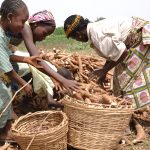
Brown Bag Research Seminar: Distributional effects of higher cassava yields in Nigeria: An ex-ante analysis
Wednesday, October 23, 2019, 2:00 pm - 3:30 pm
This study provides a method for ex-ante estimation of the distributional welfare effects of a change in the yield of a crop using household survey data. We apply this method to estimate the impact of a 10% increase in cassava yields on income and poverty rates among different types of Nigerian households.
- « Previous Page
- 1
- …
- 24
- 25
- 26
- 27
- 28
- …
- 46
- Next Page »