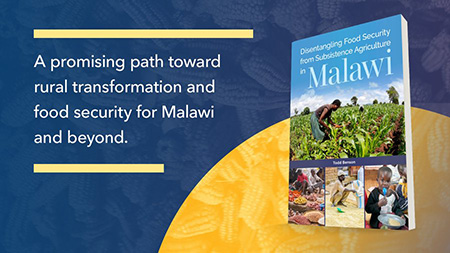
The Monthly Maize Market Reports are developed by researchers at IFPRI Malawi, with the main goal of providing clear and accurate daily maize price data in selected markets throughout Malawi. The reports are intended as a resource for those interested in maize markets in Malawi, namely producers, traders, consumers, or other agricultural stakeholders.
2019 IFPRI Annual Report

Cutting-edge research around the world is informing policies, programs, and interventions to end hunger and poverty.
2020 Global Report on Food Crises: 135 million in 55 countries faced acute hunger in 2019
An estimated 135 million people in 55 countries around the world faced acute levels of hunger in 2019, according to the 2020 Global Report on Food Crises, released April 20—the highest level of acute hunger seen since the report’s 2017 inception. In 2018, the number was 118 million in 53 countries.
Discussion Paper 1920: The Role of Interactive Radio Programming in Advancing Women’s Empowerment and Crop and Dietary Diversity
This IFPRI discussion paper authored by Catherine Ragasa, Diston Mzungu, Kenan Kalagho, and Cynthia Kazembe, focusses on the use of radio, which has been used for decades as a tool to disseminate information and provide education on agricultural practices. The study assesses the effect of interactive radio programming on women’s empowerment and agricultural development, employing nationally representative household panel data from 2016 and 2018 combined with gender-disaggregated focus group discussions and interviews of service providers.
2020 Global Food Policy Report
Food systems are evolving quickly, but not everyone is benefiting. The 2020 Global Food Policy Report explores the need to build more inclusive food systems to reduce poverty and malnutrition and improve lives.
- « Previous Page
- 1
- …
- 46
- 47
- 48
- 49
- 50
- …
- 72
- Next Page »