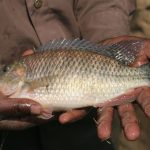
21 October 2025 Stakeholders from government, research institutions, NGOs, and donor agencies gathered at Ufulu Gardens in Lilongwe for the dissemination of a groundbreaking study on the use of organic waste to reduce deforestation and improve the quality of smoked fish products. The study, conducted by WorldFish under the EU-funded DeSIRA project, offers promising solutions […]
Country brief: Malawi: Cost effective options for inclusive and sustainable development
Abstract: In this policy brief, we present findings of a systematic evaluation and ranking of investment options for Malawi’s agrifood system based on their cost-effectiveness in achieving multiple development outcomes, including agrifood gross domestic product (GDP) growth, agrifood job creation, poverty reduction, declining undernourishment, and lowering diet deprivation. Additionally, the study assesses their environmental footprint, […]
Asking the right questions: A stakeholder dialogue on generative AI in digital extension

Generative artificial intelligence (gen AI) is gaining traction in agriculture. Conversational agents such as chatbots and voice assistants are being explored as digital extension solutions, promising scalable, personalized advice for farmers that can supplement and support the work of human extension agents. Yet designing and deploying such AI tools presents many challenges.
From participation to power: Advancing women’s leadership in rural development

The International Day of Rural Women (October 15) highlights the essential roles that rural women play in sustaining households, managing natural resources, and contributing to rural economies. Yet even as they participate extensively in agriculture and local organizations, women’s ability to influence the policies and institutions that shape their lives often remains limited.
IFPRI Maize market report September 2025
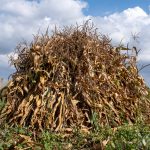
The Monthly Maize Market Reports are developed by researchers at IFPRI Malawi, with the main goal of providing clear and accurate daily maize price data in selected markets throughout Malawi. The reports are intended as a resource for those interested in maize markets in Malawi, namely producers, traders, consumers, or other agricultural stakeholders. Highlights Retail […]
- « Previous Page
- 1
- …
- 3
- 4
- 5
- 6
- 7
- …
- 93
- Next Page »