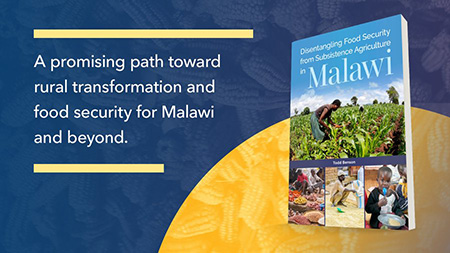
Do electoral considerations play a role in the targeting of humanitarian transfers? We analyze the targeting of direct cash and food transfers distributed in Malawi in response to an exceptionally poor harvest following a late and erratic rainy season of 2015-16. Combining household survey data on transfers with a remotely sensed measure of drought and […]
Working Paper 38: Are the drivers of production and sales of maize, groundnut, and soyabean by farming households in Malawi changing?
Abstract By directing increasing shares of their farm production to the market and, thereby, realizing greater incomes, farming households can accelerate local rural economic development. In this study, we examine household and spatial factors that may drive smallholder farming households in Malawi to produce and sell maize, groundnut, and soyabean. Two cross-sectional analyses are done […]
Working Paper 37: The Short-term Impacts of COVID-19 on the Malawian Economy, 2020 – 2021

This working paper extends and updates the initial results of modeling undertaken by the International Food Policy Research Institute to assess the short-run impacts of COVID-19 control measures on the Malawian economy.
Working Paper 35: Who uses and who benefits from warehouse receipt systems?
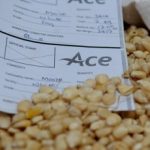
IFPRI Malawi Working Paper 35, authored by Jack Thunde and Bob Baulch, examines who uses and who benefits from warehouse receipt systems using unique transaction level data from the Agricultural Commodity Exchange for Africa (ACE) based in Malawi.
Working Paper 34: Beyond the Passbook Relationship

This working paper, authored by Dennis O. Ochieng, examines preferences for contracts among cotton and tea farmers and companies in southern Malawi. The study analyzes the similarities and differences in preferences of farmers and buyers and provides valuable insights that can guide the design of better contract farming arrangements.
- « Previous Page
- 1
- 2
- 3
- 4
- 5
- …
- 9
- Next Page »