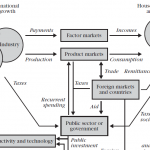
Malawi’s economic future is dependent upon a transformation of the economy that will involve increased economic productivity overall and considerable movement of labor and capital out of agriculture and into manufacturing and services. A dynamic Computable General Equilibrium model of the economy of Malawi was used to better understand the development gains that would be realized by 2030 through significantly increasing separately the productivity of each of the three sectors of the Malawian economy – agriculture, industry, and services.
Working Paper 31: Consumer Choices and Demand for Tilapia in Urban Malawi: What are the complementarities and trade-offs?
Working Paper 31 is an output of the Bunda Grant Scheme program of IFPRI-Lilongwe. It analyzes consumer choices and demand for two species of tilapia, Lake Malawi Oreochromis (Nyasalapia) spp. (Ny) and Oreochromis shiranus (Os), in unprocessed and processed form, in urban Malawi. The authors use data collected from a sample of 584 urban households in Malawi’s two major cities, Blantyre and Lilongwe.
Working Paper 30: Are Malawian Diets Changing? An assessment of nutrient consumption and dietary patterns

This working paper provides an updated analysis of the dietary patterns of Malawian households and their consumption of select nutrients – calories, protein, iron, vitamin A, zinc, and folate – using data from the third (2010/11) and fourth (2016/17) rounds of the Malawi Integrated Household Survey (IHS).
Working Paper 29: Structure, Conduct and Performance of Maize Markets in Malawi
Recent rises in the price of maize have again raised questions about the structure, conduct and performance of Malawi’s maize markets. Maize is by far Malawi’s most important staple crop and contributes about 66 percent of calories to typical household diets. The crop, which contributes 45.2 percent to the Consumer Price Index, is both a […]
Working Paper 28: Nutrient and mycotoxin content of commercially-sold premixed infant cereals in Malawi
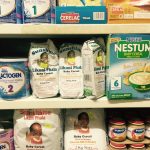
Working Paper 28 explores the quality of premixed cereals sold for infant feeding in Malawi in a multifaceted way, assessing nutrient adequacy, mycotoxin contamination, and labeling accuracy. Fortified premixed cereals can help caregivers meet infants’ nutrient needs, when used to complement continued breastfeeding alongside the gradual introduction of nutrient-dense family foods. While these cereals are […]
- « Previous Page
- 1
- 2
- 3
- 4
- 5
- 6
- …
- 9
- Next Page »